Way to make a Travel > Travel stories > Oslo Top Attractions: Museums, Parks, and Lifestyle
OSLO, NORWAY — Oslo is the oldest the most vibrant of all of the Scandinavian capital cities, known for its blend of modern and historic architecture, world-class museums, and abundant green spaces. City modern museums, as the Fram Museum, Munch Museum, and National Museum are rooted deep in its rich history. Visitors can enjoy outdoor activities in Oslofjord, see trendy neighborhoods, and walk through the ancient Karl Johans Gate.
Short history of Oslo
At the beginning of the 14th century, Hakon V consolidated its power by moving to Oslo, where he built fortress, known as Akershus fortress. Throughout its history, Norway experienced ups and downs, punctuated by major disasters, Danish rule, and economic turmoil, until 1814, when it seceded from Denmark and joined Sweden. It regained independence in 1905 and adopted its original name after 1925.
Origin of the name Oslo
The name is derived from ‘As a Norse‘ word for God, and ‘Lo’ meaning filled. The city what founded around 1048 by Harald Hardrada. His son Olav Kyrre, established a bishopric and build a cathedral here, thought the kings of Norway continued to live in Bergen – an oddly inefficient division of state and church, considering the difficulty of communication.


Today city’s center is largely the work of the late 19th and early 20th century with its wide streets, dignified parks and gardens, solid buildings and long classical vistas combine to lend it a self-sufficient convenient air.
In Oslo, you get the feeling the inhabitants are proud of their wealthy city and of the rapid changes that are underway, notably and ambitious construction program and a fast-growing cultural life.
Museums in Oslo
Oslo’s biggest draw is its museums, which cover a hugely varied and stimulating range of topics. Thor Heyerdahl’s Kon-tiki museum, the fabulous Viking Ship Museum, the Munch Museum ablaze with a good chunk of the painter’s work, the part devoted to the bronze and granite sculptures of Gustav Vigeland, and the moving historical documents of the Resistance Museum, are enough to keep you very busy for a few days.
Oslo lifestyle
Oslo also offers a vibrant outdoor scene, with parks, outdoor cafes, street performers, and festivals that always make it attractive. The city is truly enchanting in the summer, when almost everyone enjoys the fresh air. It’s also worth visiting in winter, as its privileged location between mountains and forests makes it a dynamic and convenient ski resort.


Exploring Oslo
If this is your first time in Norway, you’ll likely be struck by its light: soft and bright in summer, generally dark in winter, with each season marked by torrential downpours or freezing blizzards. The imposing late 19th- and early 20th-century buildings that dominate Oslo’s city center blend with the climate, exuding an air of stability and prosperity. These qualities were essential to the young nation when they were built and remain a symbol of the city to this day.
Most downtown Oslo remains easy and pleasant to work around, a humming, good-natured kind of place whose airy streets and squares accommodate the appealing remnants looks of the city’s early days as well as a clutch of good museums and dozens of bars, cafés and restaurants.


East Oslo
Once you disembark, Oslo East is the closest part of the city, a sprawling and dirty area inhabited by the poorest residents. A visit wouldn’t be complete without a visit to the Munch Museum, which houses an extraordinary collection of the artist’s works. Afterward, you can easily reach the eastern shore of Oslo’s main port to admire the city panorama and glimpse the remains of the medieval city.
Oslo Parks
Northwest part of the city is far more prosperous, with big old houses lining the avenues immediately to the west of the Slottsparken. Beyond is the Frognerparken, a chunk of parkland where the stunning open-air sculptures of Gustav Vigeland are displayed in the Vigelandsparken. Further west still, there is more prestigious modern art at the Henie-Onstad Kunstsenter, beyond the city limits in suburban Hovikodden.


North part
The city’s enormous reach becomes apparent only to the north of the center in the Nordmarka. This massive forested wilderness, stretching far inland, is patterned, by hiking trails and cross country ski routes. Two T-bane lines provide ready access, clanking their way up into the rocky hills that herald the region.
The western route passes Holmenkollen, a ski resort with a unique ski jump that resembles a hooked finger on the Oslo skyline, before reaching the terminus at Frognerseteren. The station is located in the city, but the surrounding wooded hills and locks lend it a rural feel. The nearby town of Sognsvann, the terminus of the other metro line, offers a similar sense of isolation.
Despite the grand proportions of the Oslo conurbation, the city center has stayed surprisingly compact, and is easy to navigate by remembering a few simple landmarks.
Oslo S – Oslo Central station
The Karl Johans Gate, located east of the city center, is Oslo’s main thoroughfare, directly connecting the S-Bahn station to the top of the hill. The Stortinget, the seat of Parliament, is easily accessible after passing the cathedral (Domkirke) and crossing the pedestrian zone.


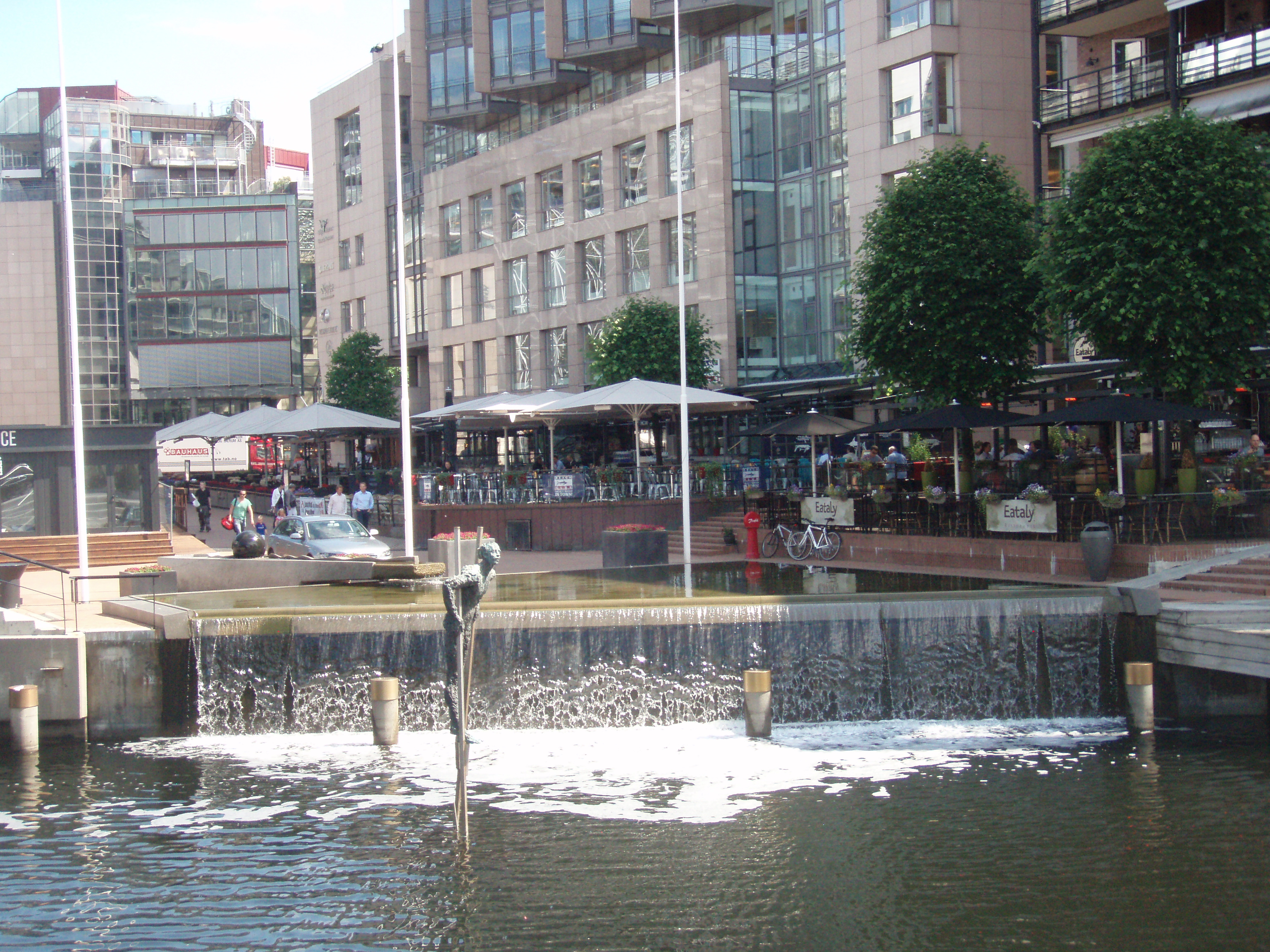
From here it sweeps down past University to Det Kongelige Slott – The Royal Palace, which sits in Parkland at the western end of the center. South of the palace, on the waterfront, is the brash harbor side development of Aker Brygge, across from which is the distinctive twin- towered Radhus.
Back towards Oslo S, on the lumpy peninsula overlooking the harbor, is the severe-looking Akershus castle. In the 17th century, Christian IV designed the narrow, dark network of streets and tall buildings between the castle, Stortinget and Oslo S. Today this area is the commercial centre of the city, but its importance is increasingly declining due to the expansion of Oslo’s suburbs.
Oslo surrounding
The two most popular attraction the Viking ships and the Folk museums, are within easy walking distance of the Dronnningen pier, the other three are a stone’s throw from Bygdoynes.
Surrounding islands
From the jetty behind the ‘Radhus‘ – City house, ferries shuttle southwest to the Bygdoy peninsula, home to the city’s showpiece museums, other ferries head south from the Vippetangen quay behind the Akershus to the string of rusticated islands that necklace the inner waters of the Oslofjord.
Bygdoy Peninsula
The Bygdöy peninsula is the most popular spot for Oslo residents outside the city center. Located southwest of the city, across the bay, it houses five independent museums that together form a captivating cultural and historical complex. It’s advisable to dedicate a full day, or even less, to it rather than two half-days.
The most pleasant way to reach Bygdöy is by ferry. Departures are from Pier 3, behind the Rathus Town Hall, with a similar schedule. The ferry serves two ports on the peninsula: Dronningen and Bygdöynes. It’s important to note that it only follows one route.


Oslofjord
The compact archipelago of low-lying, lightly, forested islands in the inner Oslofjord is the cities summer playground, and makes going to the beach a viable option for a European capital. While the ferry crossing is pleasant during the day, it’s just as enjoyable in the evening. Although most of the islands are lined with holiday homes, the quieter ones are the preferred spots for trendy young city dwellers.
Ferries to the Island leave from the Vippetangen quay, beside the grain silo at the foot of Akershusstranda a 20-minute walk or a 5-minute ride on bus #29 from Jernbanetorget.
Our Favourite Oslo Tour
Norway’s capital is regarded as one of Europe’s most walkable and bike-able city cores, making Oslo tours a very tempting way to explore the city. Follow an expert trip on foot or by car from Oslo’s enormous sculpture park and spectacular waterfront landmarks to locals’ favorite sausage and waffle restaurants. Some excursions focus on the city through the viewpoint of World War II or the Vikings, while others highlight the Oslofjord.
Swim, kayak, or sweat in floating saunas on the immaculate urban fjord—or simply take in the bays, beaches, and lush islands from an electric boat. Get an overview of Oslo Viator tours you can book directly.

Vincent_E, Jul 2024
Taste of Oslo Walking Tour
”Absolutely fantastic while it was raining out the tour guide did an exceptional job and the tour ended up being a total of 4 people including our guide which fostered a really nice and quaint experience. Not only would I recommend this to anyone wanting to taste true Norwegian cuisine. I’d happily do it again”.
Read more about – Taste of Oslo Walking Tour
Booking hotel in Oslo
It doesn’t matter if you are traveling with family, dog, friends or colleagues. Everyone is welcome in Oslo with its comfortable and affordable accommodation units in furnished apartments and hotels. Oslo offers hotels for every occasion. With Trivago hotel selection platform you’ll find an overview of cheap, child-friendly hotels to more exclusive hotels. Use the filter and find the perfect hotel for your stay in Oslo. Choose the accommodation and service that suits you and your budget.
Great location – friendly staff – Excellent stay – Booking hotel in Oslo by Trivago


👉For latest holiday best hotel offers in Oslo visit our Partner booking links here⤵️
Promotion:


Keywords: #Oslo #VibrantScandinaviancity @bhioslo @bookinghotelin @waytomakeatravel #bookdirectly @bookdirectly @promotions #bookinghotelinoslo @hotels in oslo #accommodation in oslo #osloFlights @bhioslo #Exploring Oslo #TasteofOslo #Oslosurrounding #MuseumsinOslo #Oslolifestyle
Other similar stories: Travel to Amsterdam Travel to Stockholm
Home Travel stories World Tours About






















Leave a Reply