Way to make a Travel > Travel stories > Visiting Roman ruins of Tarragona
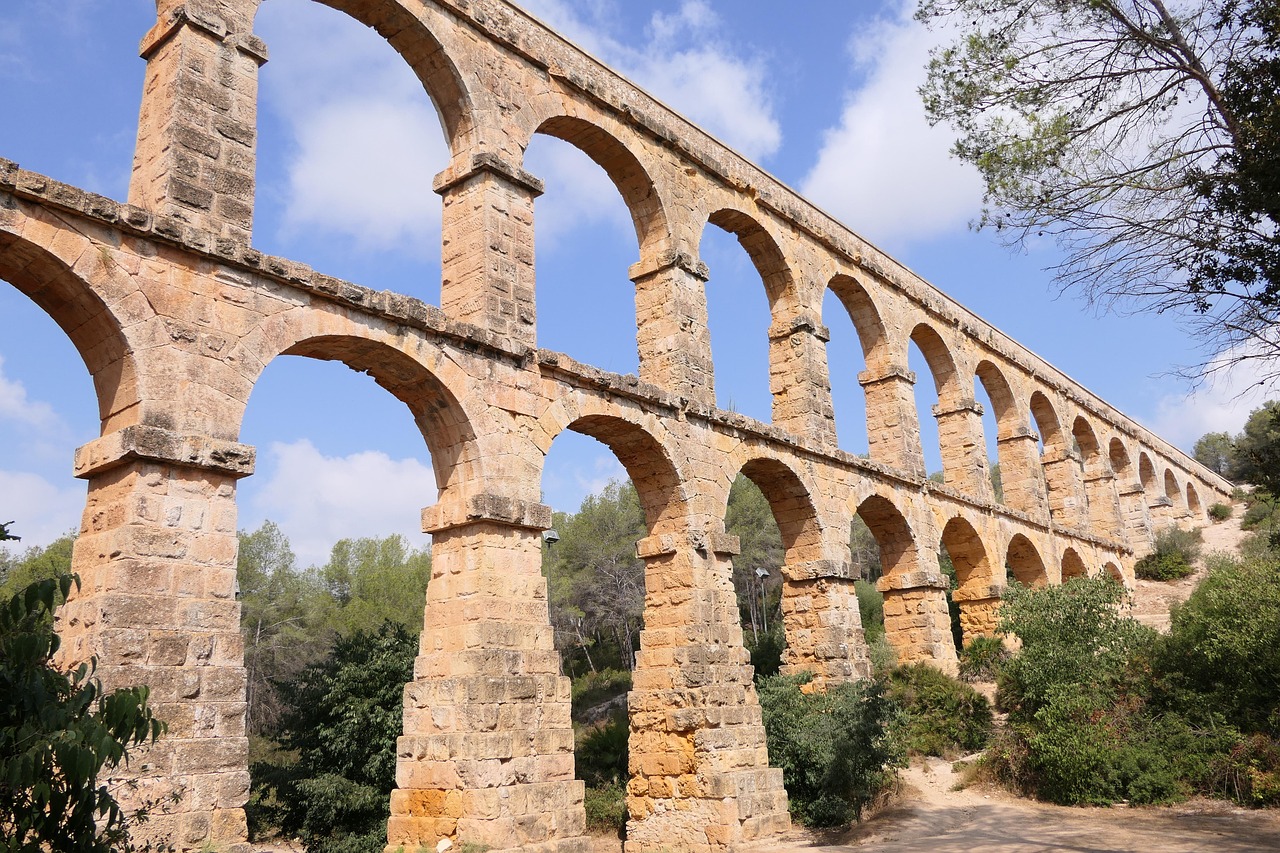
TARRAGONA, CATALUNYA – The city of Tarragona, situated on a 69-meter-high hill gently sloping over the sea, can be divided into three parts: the upper town or old town, which extends around the medieval city center, which itself was built over the Roman acropolis; the urban expansions built from the 19th century onward; and the maritime part of the city, which includes the port and the fishing district of El Serrallo. Roman Tarraco, a UNESCO World Heritage Site, which extends beyond the upper town to the borders of modern Tarragona, will be described in a separate chapter.
From the 12th century onwards, the town experienced a significant boom thanks to the political and economic power of the archbishops, who built a magnificent capital over the remains of the Roman city.

The Upper Town
In the Upper Town, which has retained its unique character and charm over the centuries and is largely surrounded by walls of Roman origin, ancient remains can be found alongside major medieval and later buildings. The most outstanding building is undoubtedly the first century cathedral, designed in the Romanesque period but largely built in the Gothic period over the ancient Roman temple, some of whose marble was reused.

Roman Cathedral of Tarragona
Cathedral has many noteworthy elements, such as the unfinished facade with the large rose window and the sculptures of the Virgin and the Apostles on the portal. Attributed to Master Bartholomew is the magnificent cloister with carved capitals, from which stands out the Romanesque door in white marble that leads into the church.
The Cathedral chapter house, which houses part of the remarkable Diocesan Museum, has an extensive collection of medieval paintings and sculptures as well as a magnificent collection of tapestries. Pere Joan, the renowned sculptor, depicts episodes from Saint Thecla’s life in polychrome alabaster on the high altar. Next to it are the 14th-century tomb and mausoleum of Patriarch and Archbishop Juan de Aragon, which has an astonishingly lifelike reclining statue, the Blessed Sacrament Chapel, and other noteworthy works of art from the Gothic, Renaissance, and Baroque periods.

Tarragona’s Romanesque architecture
In the immediate vicinity of the cathedral are the Archbishop’s Palace from 1814, the neo-Gothic seminary and the canons’ houses. Near the cathedral square, Pla de la Seu, which is reached via a grand staircase, old buildings belonging to the cathedral complex, such as the Chambers’ Palace and the Dean’s House.
In the Career de Les Coques, which flanks the cathedral on the eastern side, the former Hospital de Santa Tecla is worth mentioning. It is a fine example of secular Romanesque architecture (12th century) with a Gothic upper floor. After its restoration, it houses the seat of the Tarragona County Council.
Walking down Carrer Major towards Rambla Vella, one comes across the former Town Hall, built in Gothic and Renaissance styles, the former house of the Abbot of Pobiet, and the former Casa de la Gendralitat, the latter two with ashlar facades.
To the right, the Career de Cavaliers, where, among other mansions, stands the Casa Castellarnau, decorated by Flaugier and now housing the Tarragona History Museum. Placa del Pallol, around the corner, is where Romanesque and Gothic buildings stand. Near the square, a gate opens into the old city wall, the Porta del Roser. The modern town hall on the Placa de la Font, which occupies part of the site of the Roman Circus, was built in the 19th century over a Dominican monastery and has a beautiful Ionic façade.
The Promenade Rambla Nova
The Rambla Nova, a wide promenade built in the 19th century over the former Muralla de Sant Joan, which bordered the city to the south, runs through Tarragona’s Eixample, a historic urban expansion area connecting the upper town with the port district. It features various modernist buildings and some interesting monuments, such as the Monument to the Heroes from 1811 by Julio Antonio and the Monument to Roger de Liuria. The monument location at the beginning of Passeig de les Palmeres above the Roman amphitheater offers a beautiful view of the sea.

The traditional fishing district of El Serrallo, located in the west of the city between the mouth of the Francoli River and the fishing pier, houses the fish market and numerous fish restaurants.The port of Tarragona has developed into Catalonia’s second-largest port due to the presence of the petrochemical industry in the area and includes a modern and active leisure area. In addition, numerous cruise ships dock here.


Tarragona beaches
Tarragona boasts one of the bluest skies in the Mediterranean and numerous beaches, such as the Platja del Miracle at the foot of the city. The beaches of Calafell and Cunit border the extreme northeast of the Costa Daurada. The historic center of Calafell, located somewhat off the coast, lies at the foot of the Castell de la Santa Creu castle, partially surrounded by walls, with the former Romanesque-Lombard church from the 11th century and a crypt.
Costa Daurada Spa and Wellness centers
When it comes to tourism, health, relaxation, and well-being, the Costa Daurada also has a lot to offer. Two options stand out, which are as far apart in terms of location as they are conceptually: the spa hotel in Vallfogona de Ruicorb and the Hotel Termes Montbrio in Montbrio del Camp.
Vallfogona
Vallfogona is thus a small spa town where the tranquility, the familiar atmosphere of its regular guests, the walks, bike rides, or short car excursions, allow you to leave the worries and stresses of everyday life behind and devote yourself to relaxation and your own well-being.
Vallfogona de Ruicorb is located in the northernmost part of the Conga de Barbera district in the Corb Valley, not far from the Segarra and Urgell mountains. As a medieval center of the Templar commandery, which was later taken over by the Hospitaller Order, the historic town center, dominated by a castle, was surrounded by a wall. Vallfogona de Ruicorb became famous thanks to the cleric and popular Baroque poet Francesc Vincent Garcia (1582-1623), the ”Rector de Vallfogona”, who held the parish office in 1607.
At the beginning of the 20th century, the long-known existence of the Font Pudosa (sulfur spring) and Font Salada (salt spring) mineral and healing springs led to the construction of the spa hotel deep in the valley in 1901, which has since been remodeled several times. The thermal swimming pool in the spa gallery dates back to 1992. A large, tree-lined park surrounds the hotel, and the steadily increasing number of spa and holiday guests has led to the opening of additional accommodations.
The characteristics of the water (containing sodium chloride, calcium and magnesium sulfates) at a spring temperature of 14°C and the techniques used – sauna, hydromassage, showers, mud packs, aerosols, steam baths, inhalations, thermal baths, etc. – provide suitable conditions for the treatment of rheumatism, arthrosis, arthritis, constipation, asthma, chronic liver diseases, and the implementation of cellulite, slimming, relaxation, and anti-stress therapies.
Montebrio
Montbrio del Camp lies in the beautiful center of the Camp de Tarragona region, not far from the coast and Reus. In the 1980s, a large thermal complex called the Hotel Termed Montbrio was built in this traditionally agricultural village, utilizing the existing healing springs. It includes several restored modernist buildings and other ultra-modern buildings, as well as a large, lush park.


The properties of the water (hyperthermal, ranging from 41°C to 81°C depending on the source, rich in sodium chloride, ions, bicarbonate, sulfates, and other minerals) make it particularly suitable for the treatment of chronic rheumatism, skin, and respiratory diseases, as well as for anti-stress and weight-loss treatments.
The standard spa offerings are complemented by a beauty and health center. As a state-of-the-art, next-generation spa hotel (with aquatic facilities), the complex meets all the requirements of a modern wellness concept, and its proximity to the beach and the Port Aventura theme park allows for a more dynamic stay than traditional spa hotels.

Castellar Folklore Event in Tarragona
The folkloric expression par excellence of the Costa Daurada are the “castellars” a blend of folklore event and popular sport that, due to its visual appeal and the courage and solidarity required, arouses great passion and loyalty among its followers and admiration among bystanders. These are groups of boys and men—in recent years, girls and women—who, to the sound of a shawm, construct castells, or human pyramids of varying heights and structures.
These organized groups perform at major festivals, competing with other groups (colles) to construct the best, riskiest, and tallest pillars, torres, or castells (castles), which can have up to ten floors. When the lightest and smallest casteller – ’’the enxaneta’’ arrives, he gives a hand signal, with the construction being considered complete.
Great location – Friendly staff – Excellent stay – Booking hotel in Tarragona by Trivago


👉For latest holiday best hotel offers in Tarragona and visit our Partner booking link here⤵️
🌐 HOTELS IN TARRAGONA BY TRIVAGO
Promotion:


Keywords: @bhitarragona @bookinghotelin @waytomakeatravel @bhihotels @bhicruises @bhitours #bookdirectly @bookdirectly @promotions #booking hotel in tarragona @hotels in tarragona #tarragona attractions #activitiesintarragona #accommodationintarragona #tarragonahotels #bookinghotelintarragona #Visiting Roman ruins of Tarragona
Other similar stories: Barcelona – Catalunya Cultural Heart Visit of the Montserrat’s iconic site Trip to Azores
Home Travel stories World Tours About








































Leave a Reply