Way to make a Travel > World Tours > Nature Isle of the Caribbean
DOMINICA, CARIBBEAN – The volcanic, rain forested Nature island of Dominica thrusts out of the Caribbean Sea from a deep magical underwater seascape of submerged pinnacles and corals. On land, Dominica offers nature in the raw, divided by a cloud-covered spine of forested peaks, narrow ridges, bubbling waterfalls, sulfurous springs and a boiling lake. Wild and untamed, this ‘Nature Island’ is the only Caribbean Island that Christopher Columbus would still be able to recognize some 500 years later.
How to get to Dominica?
To get to Dominica, fly into the Douglas Charles (DOM)International airport by connecting through Caribbean hubs like Barbados (BGI), Antigua (ANU), St. Lucia (SLU), or Puerto Rico (SJU). American Airlines and United offer connecting flights, often from Miami or Newark. Alternatively, take the L’Express des Îles ferry from Martinique, Guadeloupe, or St. Lucia.

Language, People, Culture & Economy
In the Windward Islands, between French Guadeloupe and Martinique, Dominica has been settled by Britain and France. English is the official language, but a French Creole patois is widely spoken. The island remains the last outpost of the Carib Indians, Amerindians, who were calling the Caribbean home centuries before the Europeans arrived. The blending of the Carib, African, French and English cultures is celebrated on Creole Day at the end of October or in the beginning of November, when everyone wears national costume to go to work or school.
Cocoa and coffee-growing under the French gave way to the cultivation of sugar and limes under the British. Bananas became the byword for economic success in the 1930s, but since the failure of the Caribbean to compare with large US-backed South American banana producers, Dominica has turned to eco-tourism.

Dominica Climate
Dominica has a hot, humid, tropic marine climate, moderated by trade winds and characterized by heavy rainfall, particularly in its mountainous interior. Temperatures remain consistent year-round, averaging 25°C–30°C (77°F–86°F), with the dry season spanning February to May and the wet, hurricane-prone season from June to November.


Best time to visit Dominica
The greatest time to visit Dominica is during the dry season, which lasts from February to April and provides sunny weather, lower humidity, and ideal conditions for hiking, diving, and whale watching. These months have the most pleasant weather, although they are busiest and more expensive.
Roseau Places of interest
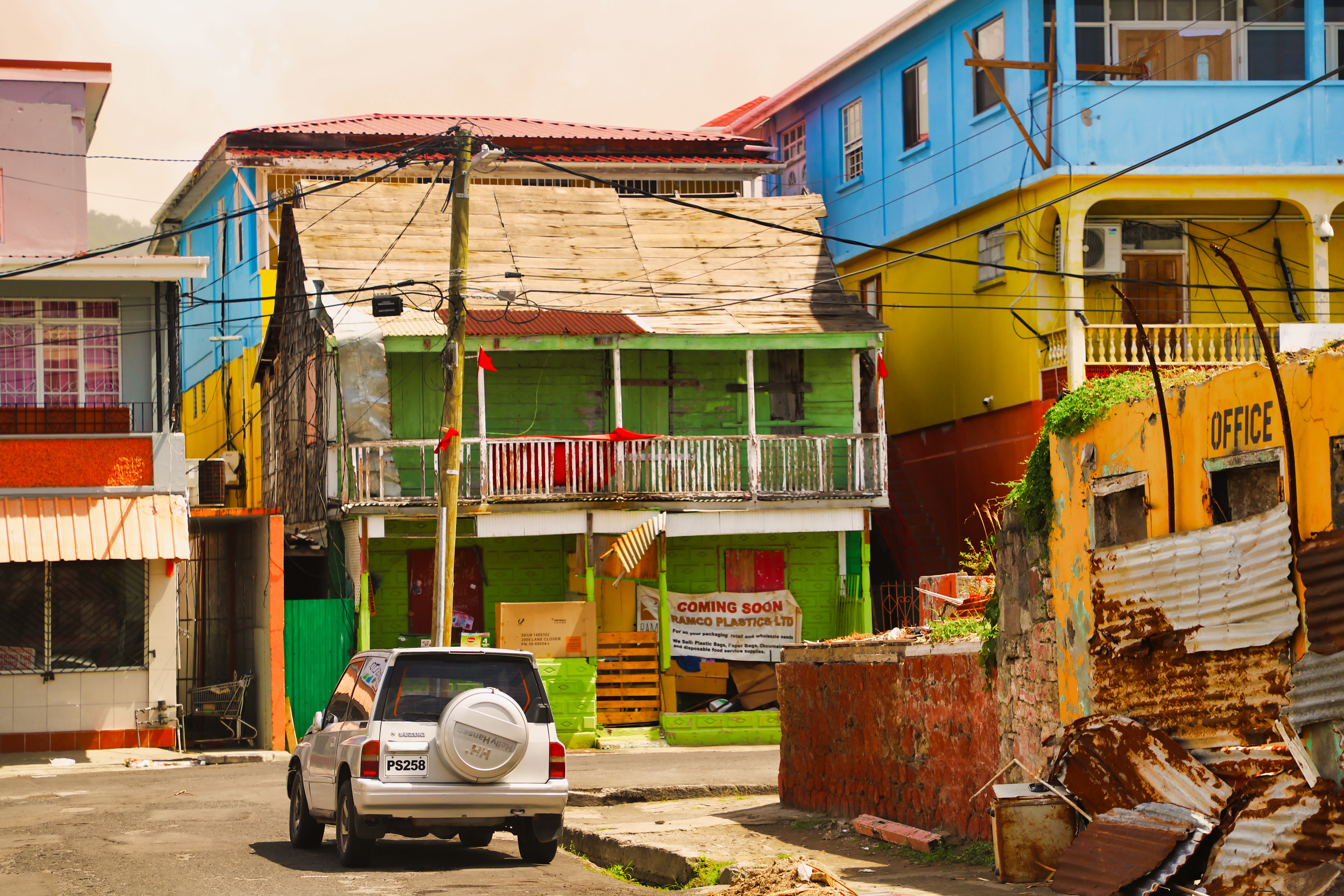
Located on the south part of the island, Roseau is the capital city of Dominica. Tatty tin-roofed houses and old French colonial buildings with hanging verandas give Roseau a ramshackle air. Dominicans are dedicated to the land and most have their own vegetable gardens either up in the forest or next to their home.
Dominica Museum
Saturday is market day when the bounty of the countryside is brought into town and a festive air pervades. Facing Bay front, the engaging Dominica Museum covers everything from island geology and economy to the history of the slave trade and La Rose Creole restaurant provides a good lunch.

Botanical Gardens and tropical vegetation
The splendid Botanical Gardens on the north-eastern edge of town, are divided into an ornamental and nursery section, where cherries and avocados are grown for profit.
Dominica cannot afford the luxury of gardens purely for pleasure. In 1979, Hurricane David devastated the vegetation, leaving uprooted trees that are still visible, including an African baobab tree. In better condition are the Carib tree, banyan, pine cactus and century palm, as well as the vivid red African tulip, crawling with huge caterpillars proof that everything in Dominica grows on a gigantic scale. Other highlights are the ackee tree, which is used in the Jamaican national dish, the West Indian palm, the balsam tree, a mahogany with hanging pods and the bizarre cannon-ball tree.
Portsmouth
Sometimes vessels dock at Dominica’s second cruise ship terminal at Portsmouth, within easy reach of the spectacular Cabris National Park, a dry tropical forest full of bay, mahogany, sandbox, white cedar and Longwood.
Among the trees are the remaining 18th century British fortifications of Fort Shirley, complete with gun batteries, storehouses and officers quarters. The seascape around the headland is a protected marine park providing excellent diving and snorkeling.

Dominica Attractions
Most visitors focus on trips to the Emerald Pool, Titou Gorge, or Trafalgar Falls, but you can go independently by taxi, too. You can also go on kayak, snorkeling and scuba-diving trips, as well as whale-watching safaris off the west coast.
Canoeing the Indian River in Dominica
From Portsmouth, you can be paddled in a wooden dugout canoe along the Indian River, as sea captains once travelled to meet the Amerindian chiefs.
Columbus sailed into Prince Rupert Bay when he first discovered Dominica in 1493. The river is festooned with foliage, and the boatmen will point out the wildlife as you go. There’s no need to book in advance as enterprising boatmen will be vying to take you, but avoid the boats with motors.
From Portsmouth, you can also take a trip to the Carib territory along the northeastern wild Atlantic coast, where Dominica’s Carib Indians grow cassava, live in houses built on stilts and sell colorful basketwork from stalls by the roadside. A Carib chief will tell you their history.
The trail to the Trafalgar Falls officially ends at the viewing platform, and anyone proceeding beyond this point is doing so at own risk. However if you do decide to go closer to the falls, for your personal safety it is strongly advised against swimming while it is raining, as flash floods can occure on both Rivers that form the waterfall.
Under the Sea
Part of Dominica’s appeal is the sharpness with which the ocean floor drops off from the shore, reaching depths of several hundred meters just a stone’s throw from the coast. Most shore excursions include the option of exploring the reefs of snorkeling in the shallows.
Scuba-diving is centered on Soufriere Bay and Scott’s Head, where hot and cold water springs bubble under the surface. But diving is also feasible in the north, around the Cabrits Peninsula, and at night, when octopuses, turtles, stingrays and the black -tipped reef sharks reveal themselves.

Whale Watching
At the whale-watching capital of the Caribbean, Dominica is the ideal place to spot pilot whales, false killer whales, sperm whales a spotted whales, as well as bottle-necked dolphins. Between November and March, a classic whale and dolphin trip offers a 90 percent success rate in spotting both creatures.
The catamarans are equipped with sonar, backed up by a look-out scanning the surface for tell-tale signs. The boats head along the west coast, stopping regularly to take soundings.
The humpback whale is more often heard than seen, and you may see one just basking at the surface, like a huge rock, until after about 40 minutes or so it flips its great black fin tail and dives back own into the depths. The pilot whale prefers to travel in pods of 60, while a sperm whale might be accompanied by a 6 metre calf.
As for dolphins, they love to surf the wake of the boat.
Visit the Boiling Lake
One of the toughest trails in the Caribbean, the hike to the Boiling Lake is used as a fitness test by the Dominican army, and is offered only by cruise lines with a fair proportion of active passengers.
This full day hike starts from the Titou Gorge and takes up top four hours in each direction. Rewards include the pleasures of passing under canopies of greenery formed by giant tree ferns, of fording mineral-rich streams, relishing rare views of Martinique and Guadeloupe, and climbing knife-edged ridges into a primeval landscape.
The track passes through the Valley of Desolation, a lunar landscape in a long, jagged volcanic fissure, with boiling pools of mud and vents and geysers belching out stinking clouds of sulfurous gases.
Suddenly the Boiling Lake comes into view, it is usually shrouded in clouds of stream. When the mists clear, the magma-heated cauldron reveals a surface heaving with bubbles – the second largest pot of boiling water in the world.
Our Favorite Dominica Tour
Jonalda_S, Feb 2026
Waitukubuli Dolphin and Whale Watch in Dominica
” Everything was great! We saw the whales, and overall it was a beautiful experience. The only thing I didn’t really like was the communication with the guide, as he was a bit impolite. But since the main goal was accomplished, we just didn’t pay much attention and enjoyed the moment hahaha.”
Read more about – Waitukubuli Dolphin and Whale Watch in Dominica.
Great location – Friendly Staff – Excellent Stay – Booking hotel in Roseau by Trivago


👉For latest holiday best apartment and villas offers in Dominica visit our Partner booking links here⤵️
Promotion:


Keywords: @NatureIsleoftheCaribbean @bhidominica @bookinghotelin @waytomakeatravel #bookdirectly @bookdirectly @promotions #bookinghotelindominica @hotelsindominica #dominica attractions #activitiesindominica #dominicatraveltips #accommodationindominica #dominicahotels #bookinghotelindominica #dominicaroseau #attraction
Other similar stories: Trafalgar Falls Cozumel and east mexican coast Virgin Gorda
Home Travel stories World Tours About








































Leave a Reply