Way to make a Travel > World Tours > The cradle of civilizations
ISTANBUL, TURKEY – the great metropolis, political, economic, trade and business center and the cradle of civilizations where East and West, Asia and Europe meet. With a particular consideration of historical monuments and cultural richness, Istanbul may only be compared with Rome. Its strategic position place this beautiful city on a world map as one of the most important geopolitical locations.
How to get to Istanbul
By Car
Turkey’s road network spans the entire country, with good connectivity between major cities. The network’s capacity is also adequate, with the majority of highways capable of handling the current traffic. However, there are certain bottlenecks, especially in urban areyas. Therefore, the most convenient way to visit Istanbul is by plane.
By Plane
Istanbul has two international airports, Istanbul International Airport (ISL) and Sabiha Gökçen. Istanbul Airport is one of the newest and biggest built airports in Europe and is closer to the city center operated by Turkish airlines and Iberia. Sabiha Gökçen is located 50 kilometers away on the Asian side and is the usual base for airlines such as Vueling and Pegasus. The metro line provides a comfortable and most efficient connection between the two airports and the city center.
By Train
Turkey has a well-developed rail network that connects it to other Turkish cities as well as other European countries. Interrail tickets are accepted for trips to Istanbul.
Istanbul climate
In Istanbul, summers are warm, humid, dry, and clear, while winters are lengthy, cold, windy, and partially cloudy. Throughout the year, the temperature ranges from 38°F to 85°F, rarely falling below 30°F or rising over 90°F.
Best time to visit Istanbul
The best time to visit Istanbul is spring and autumn, when the weather is pleasant and the skies are clear. These are good times for touring, site seeing, and exploring local markets.
Istanbul facts
• With a 5% annual increase, population in Istanbul doubles every 12 years. Although its population is not accurately known, it is an estimated 12 to 15 million,
• ….each year, 1000 new streets are constructed within the city, and brand new settlements rise on the east west axis,
• ….one out of every five Turkish citizens is living in Istanbul,
• ….around 2 million tourists visit Istanbul every year and admire its historical and natural beauties,
• …the Bosphorus bridge carries 200 000 vehicles and 600 000 people a day.

The cradle of civilizations history
Neolitic age
The earliest traces of settlement around Istanbul are observed on the Asian side and the history of the site extends far back to the neolitic Age. The first village near Topicapi Palace was founded in 680 BC in Khalcedon on the Asian side. Two decades later, Megaron settlers led by commander Byzas arrived and founded the first major city in Sarayburnu District, the historic district on the Istanbul’s European side.
Antique period
In 513 BC, the city was captured by Persians, and in 407 BC Istanbul came under the rule of Athens. The Galatians of European origin, settled on the Asian side of the city in 227 BC.
Roman time
146 BC, a military alliance was concluded with Rome for the defence and security of the city. In 196, Roman Emperor Septimus Severus incorporated the city into the territory of the Roman Empire. Emperor Constantine the Great undertook extensive residential development throughout the city, renamed the city Constantinople, and solemnly announced to the world that the city was the second capital of Rome. At that time, strong city walls were built around the city.
Through the efforts of Constantine the Great, who had admired Christianity under the influence of the deeply Christian mother, the new religion spread throughout the city and became the state religion in 391.
Byzantine time
Although the Western Roman Empire fell in 476, the Eastern Roman Empire preserved its power and influence. Following Emperor Theodosius death in 395 AD, the Roman Empire was divided, with Constantinople serving as the capital of both the Eastern Roman Empire and the Byzantine Empire.
Between 527 and 565, during Justinian’s rule, many new buildings were built, the first of which was the Hagia Sophia. Under the Byzantine Empire’s rule, the city saw its most prosperous period. From 666 to 870, the Arabs attempted to seize the city multiple times. The dispute between the Catholic and Orthodox churches intensified and the two churches were separated from each other in 1054. Constantinople became the religious center of the Orthodox.
Ottoman era to present days
The Ottomans launched their first siege of the city in the late 14th century. The city got besieged by Bayezid I in 1390 and Murat II in 422, before being taken by Ottoman soldiers led by Mehmed II in 1453. The city took the name Istanbul and became the center of the Islamic world.
From the 16th century until the 18th century, the cradle of civilizations was adorned with magnificent mosques, complexes, and palaces. However, the earthquakes and fires inflicted significant damage to the city. As a result of Empire-wide rehabilitation initiatives in the nineteenth century, there was a shift from classical Ottoman architecture to Baroque and Rococo. After the World War I the allied armies liberated the city. After Sultanate and Caliphate abolishment modern Turkish Republic declared its recognition with the capital city of Ankara. Istanbul since that time extend rapidly as the trade and commercial center of Turkey and one of the biggest metropolis in the world.
Places of interest in Istanbul
This sunny, both oriental and modern city boasts the medieval squares, fascinating history, famous monuments, and museums brimming with artifacts from various epochs and civilizations.
Hagia Sophia
Hagia Sophia, which was accepted as the greatest and most sacred piece of the city during the Byzantine age, is today a museum that the visitors admire as an unrivalled architectural masterpiece. Hagia Sophia is a Roman monument constructed in the Byzantine Age. Despite the new techniques and inventions in architecture during the 800 years period from the construction of the church till the demolition of the Empire, no other building could be constructed to surpass Hagia Sophia. From the date it was constructed until the date when Istanbul was conquered, Hagia Sophia served as a church. As of this date until the year of 1934, Hagia Sophia served the Muslims as a mosque for 481 years. After an extended restoration with the instruction given by the founder of Republic of Turkey, Mustafa Kemal Ataturk in order to bring the Byzantine mosaics coated with stucco in 1750 into daylight, the building was opened to visitors as a museum in February 1935, and it is the 3rd museum which is most visited in Turkey.
Skip the Ticket Lines Pass HERE


Topikapi Palace
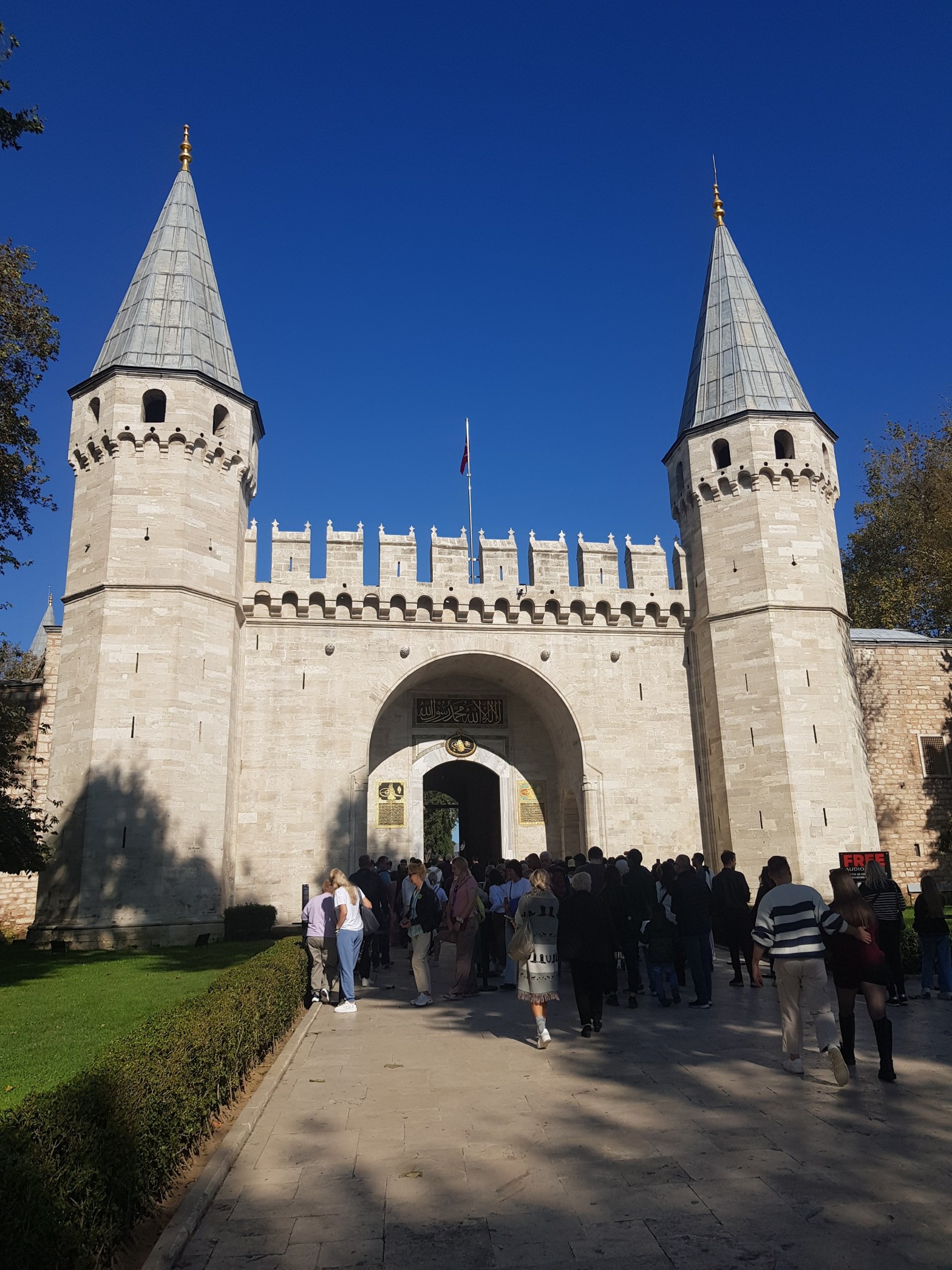
For almost 400 years, Topikapi Palace was the administrative center of the Ottoman Empire, one of the largest empires in the world. It is undoubtedly the most important historical site in Istanbul. With more than 2.5 million visitors per year, Topikapi Palace is one of the most visited museums in Turkey and Europe. After the conquest of Istanbul by the Turks in 1453, the Ottoman Sultan Fatih Mehmet, who resided for some time in a rather small palace near the Grand Bazaar in the Bayezid district, built between 1457 and 1478 on the ruins of an ancient Roman city buildings that today constitute the essence of the Topikapi Palace. In the following centuries, all the Ottoman Sultans enriched and widened the palace with new structures until it was completely abandoned in the 19th century. The palace, surrounded with walls, around five kilometres has a total area of around 700 000m2 which is twice the area of Vatican and half of Monaco. The surrounding city walls along the coast date from the Byzantine period, and the land walls are the work of Ottomans. Topikapi was protected by 28 towers consisting of three entrances on the sea, four on the land and three courtyards with plenty of rooms, sections, chambers, pavilions, bookstore, library, treasury, harem and lot more to see and explore.


Hippodrome – the Sultan Ahmet Square
It is the hearth of the Old Town. The ancient works in the middle of this square and the structures arranged in a line around the square are the most spectacular historical remains as the cradle of civilizations. The Hippodrome construction was started in 203 during the reign of Septmus Severus just after the Roman conquest of the city. It was finally completed on May 11, 330 for the ceremonies of Byzantine Emperor Constantine the Great, who wished to make this city a second capital of the Roman Empire. The seating capacity was 30 000 spectators obtained in forty rows of seats around the ‘U’ shaped racetrack. Hippodrome with its 400 meters length and 120 meters width was one of the biggest hippodromes of the antique world after Cicius Maximus in Rome.
Obelisk
The Byzantine Emperor Theodosius I transported the Obelisk from Egypt’s Amon Temple of Kamak in 390 BC and erect it where it stands today. The obelisk has remained in the same location over 1,600 years without deterioration. It is built of pink granite and weighs around 300 tons.


The Serpentine column
This is the second oldest monument in the Hippodrome after the Obelisk, dating back as 479 BC. The Serpentine column was brought from the Apollo Temple in Delphi by Constantine the Great in 326 and was placed at the present location. This monument symbolizes the victory of the Cities States against Persians in Plataea and its original form consists of a giant golden trophy with 2 meters of diameter set on the heads of three snakes wrapped around each other.
Column of Constantine
This last column that was built by Emperor Constantine VII, nicknamed as ”Porphyrogentus”, for the memory of his grandfather, Basileus, was located just in the center of the Hippodrome Square. The column dated as the 10th century, is 32 meters high, and was covered with embroidered copper and brass plates. These plates were removed during the Latin invasion in the early 13th century and coins were made out of them.
Kaiser Wilhelm Fountain
This fountain is the last and the latest work in the Hippodrome Square and is dating as 1898. The German Emperor, who was impressed by the hospitality that he had personally experienced in Istanbul during his second trip had built this elegant fountain.

The Blue Mosque
The Sultan Ahmet Mosque, better known as the Blue Mosque, was built by the 14th Ottoman Sultan Ahmet I, who ruled between 1603 and 1617. The construction of the mosque was started in 1609 and completed in 1616 by the architect Mehmet Agha, a student of the famous architect Sinan, who undertook the architectural works of the structure. The premises included a madrasa, a hospital, an arasta bazaar, a school, a mausoleum, a caravansaries and a public fountain in addition to the mosque. Although many more mosques were built after this mosque, none of them reached the scale and elegance of the Sultan Ahmet Mosque decorations.
Grand Bazaar or Kapali Carsi
The Grand Bazaar takes the first place to visit in Istanbul for foreign visitors. Millions of different objects that are sold in thousands of oriental shops look charming and appealing for all the visitors that come to admire inside this unique and fascinating place. There are approximately 3500 shops and 15000 merchants in 80 streets inside the covered Grand Bazaar. Of the 18 gates of the Bazaar, the most important ones are Nuruosmaniye Gate which, on its pediment, has a rigging of weapon, book and flag and Bayezid Gate on which ‘God loves tradesmen’ writes and the imperial sign of Abdulhamid II is embroidered. Kapalicarsi includes 7 fountains, one well, one mosque and twelve Masjids.


The Spice Bazaar
The Spice Bazaar is located opposite the Galata Bridge, on Eminonu Quay. During the Byzantine period, in place of the Spice Bazaar there was an older bazaar where merchants from Genoa and Venice sold their wares. It was the trading center for spices imported from Egypt, which is why it is also known as the “Egyptian Bazaar”. It was built primarily for the purpose of financing the costs of the New Mosque complex. Likewise, it was completed in 1660 and has around 80 stores. Many types of spices and medicinal herbs can be found in the spice market. These can be purchased in pre-packaged packages or by weight in large bags. Besides spices, the spice bazaar’s specialties include cheese, dried meat, jam, many types of nuts, Turkish honey, natural bath sponges and oriental perfumes.


The Galata Tower and Taksim square
Taksim Square with all its buildings was under the rule of the Genovese and Venetians during the Byzantine era. No remains of these civilizations have been discovered, as the Galata Tower and the Arab Mosque are the oldest buildings of this period. During the Ottoman era, especially from the 18th century, Galata and Beyoglu became an area where merchants and European embassies settled. The 61-meter-high Galata Tower is located on the slopes of the Galata district and is visible from all sides of downtown Istanbul. One of the most famous must-see sites, it offers a unique panoramic view of the Bosporus, the Golden Horn and the Sea of Marmara. The panoramic terrace is accessible from the top floor of the tower. The tower’s current appearance was built between 1348 and 1349 by the Genovese as part of the defensive walls of the region they had conquered from the Byzantines, who called it the “Tower of Jesus”. The inner diameter of this one hundred and forty meter high tower is nine meters. During the Ottoman era, the tower was used as a prison, warehouse, lighthouse and fire observation tower.


In the 17 century Galata tower was used in a scientific project when the scientist Hazerfen Ahmet Celebi used the tower terrace to jump, and make a test flight to the other side of Bosphorus using the wings he had invented
The Tunnel
To the opposite of the Galata Bridge, there is a short tunnel which connects the districts of Galata with the district of Beyoglu. This subway was built between 1871-1976 by French engineer Eugene Henry Gavand, as a shortcut to reach the opposite side with no efforts.
Local area of Istanbul
The Bosporus
The Bosporus, which separates Asia and Europe and connects the Sea of Marmara to the Black Sea, is 31.7 km long. The Asian coast of the Bosporus stretches for 35 km and the European coast for 55 km. The narrowest point of the Bosporus, which has an average depth of 50 to 120 meters, is at the tip of Rumelihisan and measures 660 meters, and the widest point is at the mouth of the Black Sea and measures 3 .4 km.
In the Bosporus there are strong currents in both directions with an average speed of 3 to 4 km/h. The current from the Black Sea to the Sea of Marmara is on the surface, the counter-current at a depth of 40 meters. The reason is the difference in salinity and altitude between the Black Sea and the Sea of Marmara.
The Bosporus, which is vital for Romania, Bulgaria, Ukraine and Russia to reach the Mediterranean and the oceans, is an international waterline under control of Turkey, as mentioned in the Montreal Treaty. Annually about 50 000 cargo ships, supertankers and big cruise ships travel through the Bosporus, which is accepted as one of the most important, the busiest and the most dangerous water lines in the world. The coastline provides different opportunities to the citizens with several district groves, tea gardens, cafés, bars and restaurants, that are especially popular and crowded during the weekends and summer months. On the European side of Istanbul where all the boat tours start and where the Golden Horn meets the passageway there are numerous natural and historical beauties starting with the Karakoy Pier, Galata bridge, Toptane palace and fountain, Kilic Ali Pasha mosque and the most famous baroque Nusretiye mosque. Further downstream towards the Ataturk bridge are located the Dolmabahce Clock Tower, and the Dolmabahce Palace museum.
The Palace, which was built as an imitation of the Louvre Palace in Paris and the Buckingham Palace in London, in order to give a more European image to the foreign ambassadors and the high ranking European visitors, has a mixed architectural style called the Ottoman renaissance style.
Besiktas
Leaving the Dolmabahce Palace cruising alongside the shoreline is where the Besiktas Square area starts. This is one of the first settlements along the Bosporus. There are a few historical places and two important museums to visit in this district. These historical Places are the tomb of Admiral Hayrettin Pasha and the Sinan Pasha Mosque to the opposite. Both the mosque and the tomb were constructed by Architect Sinan. The first museum in Besiktas is the Fine Arts Museum inside the Dolmabahce Palace and the other is the Maritime museum. The museum includes objects, models, canons, maps and uniforms belonging to the Ottoman Armada. Besides, there are three Orthodox and Armenian churches inside the Besiktas Bazaar. Moving along the shoreline, there is Yildiz Park, a large forested park famous for its laurel threes depicting from the Byzantine era. Opposite to the park, there is a magnificent structure, Ciragan Palace, built in the 19th century nowadays converted into five stars Kempinski Hotel.
Bosporus Bridge or the Ataturk bridge
Bosporus’ bridge is the 4th of the longest suspension bridges in Europe and 7th in the world. The project preparations were started in the 1950s and its foundation was laid on 20 February 1970. It was completed on 29 October 1973, the 50th anniversary of the establishment of the Turkish Republic. Its length is 1560 m, width 33 m., the distance between the high carrying poles is 1075 m. The high of the bridge measuring from the sea surface up is 64 meters.


Uskudar
Uskudar is the historical residential area of the Asian side. In spite of all modern urbanization, the district still keeps its oriental character. The ancient name of the district was “Chrysopolis” meaning the golden city. There are several stories about the name of the district. According to some of these stories, it was the golden color of the sea during the sunset, the gold coins paid as toll by the ships crossing the Bosporus the gold that was forgotten here by the Persians after their Anatolian expedition. During the Roman and Byzantine eras, Uskudar was outside the city limits and developed as a military garrison. Uskudar was embellished with different building complexes, financed and donated by the wives and the daughters of the sultans. The most important historical buildings are around the pier, however walking to the side streets one can still observe the social life of the past. The Mosque of Mihrimah Sultan, one of the two complexes built by Sinan, has a dome with sixteen windows and a baroque minaret.
Our Favourite Istanbul Tour
The Bosphorus Strait separates Europe and Asia, and a Bosphorus cruise is an iconic Istanbul experience. This round-trip yacht tour, with live commentary and fun facts from an experienced guide, visits all of the iconic riverside landmarks, including bridges, palaces, the Maiden’s Tower, the Rumeli Fortress, and more. The itinerary includes a coffee and snack stop in the charming Kanlıca area, as well as onboard Wi-Fi for easy sharing.
Read more about the Bosphorus Yacht Cruise with Stopover on the Asian Side.
Sakshi_J, Dec 2024
Bosphorus Yacht Cruise with Stopover on the Asian Side
” The Bosphorus Tour was an incredible experience! The scenic views, fascinating insights, and well-organized itinerary made it unforgettable. Highly recommend this tour for anyone visiting Istanbul!”
Booking Hotel in Istanbul
Great location – friendly staff – Excellent stay – Booking hotel in Istanbul by Trivago


👉For latest holiday best hotel and villas offers in Istanbul visit our Partner booking links here⤵️
🌐 HOTELS IN ISTANBUL BY TRIVAGO
Promotion:


Keywords: @Cradle of civilizations @bhiistanbul @bookinghotelin @waytomakeatravel #bookdirectly @bookdirectly @promotions #booking hotel in istanbul @hotels in istanbul #istanbul attractions #activities in istanbul #istanbul travel tips #accommodation in istanbul #istanbul hotels @istanbul #constantinople
Other simiar stories: Corfu Villas and Hotels Sorrento Villas and Hotels Barbados Villas and Hotels Key West Villas and Hotels
Home Travel stories World Tours About






























Leave a Reply