Japan where the soul breathes differently, the dream lasts even when you wake up, the mind starts drinking tea in silence, that feeling when reality looks like a movie.
In a country where the past is not forgotten but respected, and the future is already walking the streets, every step is an experience, and every silence tells a story. Japan is not just a destination, it is a feeling. The peace that finds you in the middle of bustling Tokyo. The sound of bamboo swaying in the garden behind a temple. The steam rising from a cup of green tea as the day rises with Mount Fuji in the background.
Time is not rushed here, it is experienced. Here even an ordinary meal becomes a ceremony, and an ordinary passerby, a bearer of centuries-old wisdom. Japan is contrast and harmony at the same time: between geisha and gadgets, the silence of a temple and the noise of the subway, cherry blossoms and digital billboards. This is a journey that you will not have to describe in words, because you will feel it long after you return. This is Japan, a movie in which you are the main character.
Osaka sightseeing
Starting the visit of Japan for overseas travelers Osaka is the most favorable arrival hub. Upon arrival at the airport, and after passport and customs control, organized groups of tourists meet with a guide designated by the agency responsible for the visit to Japan. Usually, since the flights are at night, the hotel is checked in and the next day after breakfast, the sightseeing of Osaka begins.
Subscribe Enter Win – Free Cruise to Japan
Osaka Castle
One of the most famous Japanese castles, Osaka Castle was built in the late 16th century. The castle was a key point of unification of Japan during the Azuchi-Momoyama period. Surrounded by a spacious park and moat, the castle offers impressive views of the city, and inside the museum you can learn more about the life of Toyotomi Hideyoshi, the legendary military leader who built this fortress.
Osaka by olmusician
Umeda Sky Building
After visiting the castle, a visit to the futuristic building is a must-see attraction. The characteristic exterior of this building, which defines the skyline of downtown Osaka, is two towers connected by a floating garden at the top. The panoramic platform offers a spectacular view of the city of Osaka, especially attractive on a clear day.
Umeda Sky building by chiemseherinDotonbori District by djedjJapanese lantern by djedj
Kuromon Ichiba Market
Known as the “kitchen of Osaka”, this picturesque market offers a variety of Japanese specialties, from fresh seafood, sushi bites, takoyaki to peculiar fruits. It is an ideal place to enjoy local cuisine and buy authentic souvenirs. Kuromon Ichiba Market is located in the Minami (south) district of central Osaka, Japan, in the Chuo Ward.
Dotonbori District
A visit to the most famous part of Osaka is a must-see destination for every visitor, especially when it comes to nightlife and street food. There are attractions such as walking along the canal, taking photos next to the famous Glico sign, and enjoying the neon lights.
Shinsaibashi
The longest shopping street in Osaka, is a bustling downtown district and the premier shopping hub in Osaka. It is located in the central Chūō-ku ward, just north of the famous Dōtonbori canal and south of Nagahori-dori street. Here you can find everything from luxury brands to local designers, as well as a variety of Japanese cosmetics and fashion accessories. After a day filled with history, architecture, flavors and lights, the first day of your visit to Japan ends with a return to your hotel in Osaka.
Shinsaibashi Street by cavydogTodaiji Temple by HwejaneTodaiji temple by yoshid
Nara Sightseeings
On the second day of your visit to Japan, we recommend visiting Nara, the former capital of Japan and a city of rich cultural heritage. Nara is located a 30-minute drive east of Osaka. This city is known for its UNESCO-protected sites, freely roaming deer, and monumental Buddhist buildings.
Todaiji Temple
The first stop on a full-day trip to Nara, it is one of the most important Buddhist temples in Japan. Built in 752, Todaiji Temple was the center of Buddhist power in the country. Its main hall, the Daibutsuden, was once the largest wooden building in the world, and inside it is an imposing bronze statue of the Buddha (Daibutsu), 15 meters high. This statue represents the Buddha Vairocana, a symbol of universal wisdom and light.
Nigatsudo Hall
Located on a hill east of Todaiji Temple, this hall offers a beautiful view of the city of Nara. It is famous for the Omizutori ceremony, which takes place every March and includes spectacular fire and water rituals. Later in the day, you can also visit Kasuga Taisha Shrine, known for its thousands of stone and bronze lanterns, as well as Isuien Garden, a traditional Japanese garden ideal for relaxing and taking photos.
Japanese Pagoda by PexelsOsaka castle by adliwahid
Kyoto sightseeing Day 1
The shortest travel distance between Osaka and Kyoto is 40 km. Kyoto is the former imperial capital and the cultural heart of Japan. As the third city on the Essence of Japan week-long excursion, the visit to some of the most famous sites begins with the most famous, attractive places that testify to the spiritual and aesthetic greatness of Japanese tradition.
Ryoanji Temple
A recommendation for starting the first day of your Kyoto tour is a visit to the most famous Zen garden in Japan. The temple located in the middle of the garden was built in 1450. It belongs to the Rinzai school of Zen Buddhism and is a UNESCO World Heritage Site. The Zen garden consists of 15 stones arranged on white gravel, and it is interesting that from any point you can see only 14 stones, which symbolizes imperfection in perfection, the fundamental idea of Zen philosophy.
Kyoto by kokozon
Kinkakuji Temple
Known as the Golden Temple, this building is covered in gold leaf. Reflected in a calm lake, this Temple is one of the most photographed places in Japan. Built in 1397 as a villa for the shogun Ashikaga Yoshimitsu, it was later converted into a Zen temple. The combination of aristocratic and samurai architecture makes this temple unique. Its beauty is especially evident in autumn and winter when snow covers the golden walls.
Nijo Residence
The next stop in Kyoto might be the palace of shogun Tokugawa Ieyasu. This 1603 building is famous for its “nightingale floors” that squeak when walked on to warn of intruders. The interior is decorated with lavish ,,fujis,, featuring bird and flower motifs. The gardens surrounding the residence offer a peaceful stroll through the landscape perfection of the Edo period.
Kinkakuji Temple by OnkelPKiyomizu-dera Temple by MichelleMaria_Pitzel
Kiyomizu-dera Temple
The day can be concluded with a visit to the temple that offers the best panoramic view of the city. The Kiyomizu-dera Temple is built on a hill above Kyoto. This temple, erected in 778, is well-known for its wooden terrace that rises 13 meters above the slope. The Otowa Waterfall, located below the temple, has three streams that represent long life, success, and love. The water can only be drunk from one source because greed is said to nullify the blessing. After a day of spirituality, history, and aesthetics, the evening would be spent exploring the city center, which combines tradition and modern Japan.
Start your day with a light Japanese breakfast of miso soup, tamagoyaki omelet, rice and the inevitable green tea. The energy it gives you is perfect for a day full of walking and discovery.
Fushimi Inari Taisha Shrine by tom2004catStreet Market japanSushi Salmon by juangallardosevilla
Kyoto sightseeing Day 2
Day two of your Kyoto visit begins with one of Japan’s most famous and mystical shrines, founded in 711. The shrine is dedicated to Inari, the Shinto deity of rice, fertility, and prosperity, and is revered by farmers and businesspeople alike. The most recognizable symbol of the site is the thousands of bright red ”torii” gates that form a tunnel along Mount Inari. These gates, known as Senbon Torii, were donated by individuals and companies as a token of gratitude for success and blessings. The back of each gate is inscribed with the donor’s name and the date of donation, adding further depth to this sacred site.
Fushimi Inari Taisha
As you climb the path through the gates, you encounter stone statues of foxes (kitsune), Inari’s messengers. Foxes often hold keys in their mouths, symbolizing access to the granaries and prosperity. The atmosphere is filled with silence, the rustling of leaves, and the occasional ringing of bells from the sub-temples. A combination of sensations that create a sense of spiritual presence and peace.
If you don’t want to follow the main path of torii gates, turn onto a discreet dirt path that leads to a secret bamboo grove, a hidden gem of Fushimi Inari. Unlike the famous Arashiyama grove, this corner offers complete silence and an almost surreal atmosphere, as if you had stepped into the world of a Studio Ghibli film. The path leads through tall bamboo stalks that sway in the wind, creating a sound similar to natural sound therapy. Along the way, you come across smaller sub-temples, each with its own torii gates, which further enhances the mystique of the place. There are no crowds, no noise, just you, nature and tranquility. An ideal place for meditation, photography or simply quietly enjoying the moment.
Janet, May 2026
⭐⭐⭐⭐⭐
Rating: 5 out of 5.
9D Splendid Japan-Private 3 Star Hotels-Osaka to Tokyo
” Our tour guide, Andre, was exceptional, very funny and educational. Andre even gave recommendations for after the tour ended since my friend and I extended our trip. The hotels were good, transport between cities was great. Wonderful experience, highly recommend!”
After a spiritual morning, you can continue on to visit the picturesque market known as the “Kyoto Kitchen”. This five-block long covered street offers authentic Japanese specialties and handicrafts:
– Yatsuhashi – traditional cinnamon rice sweets,
– Tsukemono – pickled vegetables of various colors and textures,
– Matcha products – tea, cakes, ice cream,
– Inari sushi – rice with pockets of fried tofu, a favorite dish of the foxes from mythology,
– Kitsune udon – hot noodles with tofu, inspired by the messengers of Inari.
In addition to food, Nishiki also offers ceramics, textiles, spices and souvenirs, an ideal place to buy souvenirs from Kyoto. The smells, colors and bustle of the market create a vivid picture of everyday life in this ancient city. The day ends with a return to the hotel. You can spend the evening taking a leisurely stroll along the Kamo River, having tea in a traditional ryokan lounge, or simply enjoying the silence of Kyoto.
Traveling from Kyoto to Hiroshima takes about 1.5 to 2 hours by the JR Shinkansen (bullet train). The ride is direct, exceptionally smooth, and covers approximately 360 kilometers. Upon arrival in the city, you can begin your tour by visiting the coast and boarding the ferry to Miyajima, a sacred island located in the Seto Inland Sea, just a ten-minute drive from the mainland.
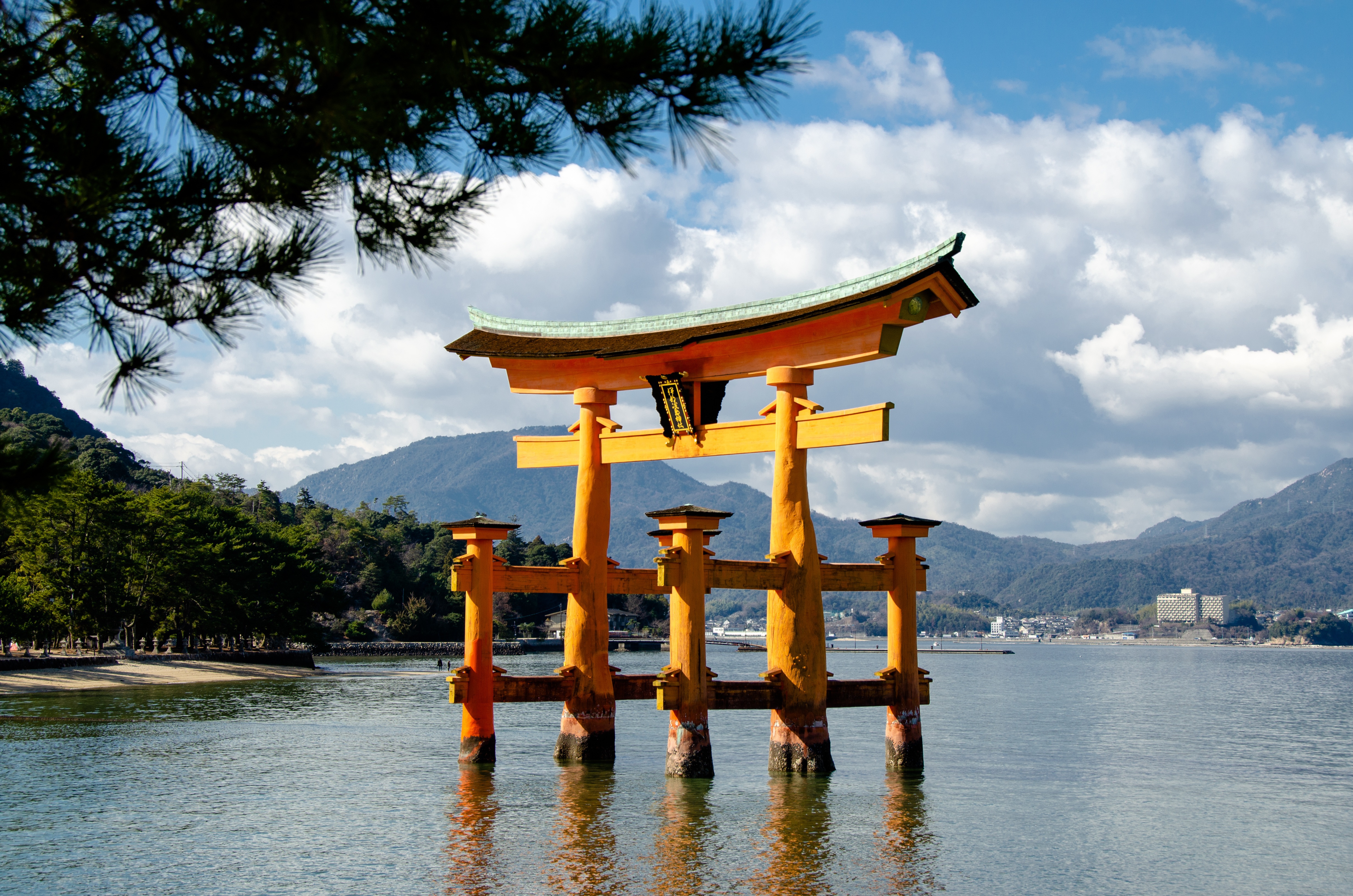
Formally called Itsukushima, it is known as the Shrine Island. It is considered one of the three most beautiful panoramas of Japan (Nihon Sankei). The island has been sacred for centuries and no birth or death was allowed on it, in order to preserve its spiritual purity.
Itsukushima Jinja
Miyajima’s main attraction is Itsukushima Jinja, a 6th-century Shinto shrine that was built in its current form in 1168 under the patronage of Taira no Kiyomori. The shrine is built above the sea on stilts so that at high tide it appears to float. The most famous symbol is the large red torii gate, 16 meters high, which stands in the water and represents the boundary between the spiritual and physical worlds. During high tide, the gate appears to float, while at low tide it is possible to approach on foot and touch its foundations.
Inside the shrine, visitors can walk along wooden corridors that connect different parts of the complex, prayer halls, stages for Noh performances, and a treasury with more than 4,000 artifacts, including gold-decorated Buddhist sutras from the Heian period.
Torii Gate – Itsukushima Jinja by pen_ashKyoto woman festival by derwegMiyajima island Samurai by BeaTowers
Omotesando shopping street
After visiting the sanctuary, a walk around the island takes you through the shopping street, where you can buy local souvenirs and try Momiji Manja, maple leaf-shaped cookies filled with red bean paste. At every step around you will encounter freely roaming deer, which are considered sacred messengers of the gods. Although they are tame, they should be respected and not fed without permission.
Senjokaku shrine
Above the shopping street is Senjokaku, known as the “Pavilion of a Thousand Tatami Mats,” built in the 16th century by order of Toyotomi Hideyoshi. The building was never completed, so it has no walls, giving it a mystical and open atmosphere. Next to it stands a five-story pagoda, whose red pillars dominate the landscape and offer a beautiful view of the sea.
At the stalls along the shore, you can try fresh oysters with soy sauce, lemon or wasabi, as well as fried versions known as agemomiji, a maple cake-like confection. Miyajima is also famous for its grilled oysters and anago meshi – an eel dish on rice.
Part two, day 5 begins with a visit to the Hiroshima Peace Memorial Park, a place of profound historical significance and a symbol of the world’s commitment to peace and nuclear disarmament…..
A beautifully evocative travel introduction—capturing Japan as a place of deep cultural beauty, spiritual calm, and unforgettable dreamlike experiences. 🇯🇵✨
Thank you Lori. Japan features amazing sights including Mount Fuji, Fushimi Inari Shrine, and Senso-ji Temple. These iconic landmarks showcase the country’s unique mix of grand nature and deep history. Let us know if you want to plan a trip to Japan. We can help you build a custom travel plan.
We returned from Japan just 2 days ago, after 9 incredible days on a package tour. We visited most of the hot spots you mentioned in this post. We both felt sad that the tour had ended. It is such a beautiful, clean place. We experienced the best service, respect, and kindness. We are already thinking about our next holiday! It was great reading your post; I kept saying, ” Been there!” with your photos 🙂
We are delighted that you visited and had a beautiful and unforgettable stay in the land of the rising sun. Hope that our post will awaken you with fond memories of what you are looking forward to. All our posts are authentic experiences and a selection of the best that one destination can offer, briefly explained. We are available to provide extensive information and help you choose your next destination and trip.
HOTELSSUBSCRIBE for a FREE Cruise!FIND YOUR DREAM SAFARIFlight+Hotel: Bundle & SaveRound the World Flights & TicketsItaly HotelsMajorca HotelsItaly HotelsUK HotelsAIRPORT TRANSFERS BUSES / TRAINS / TRANSFERSBook your flight Portable AC Rent a Car in the BalkansHotel Packages EuropeWorldwide Hotels🌞 Dreaming of Autumn? Book early & save up to 35%!Riviera Maya HotelsColombia HotelsGet 20% OFF Luxury Hotels & Resorts















































Leave a Reply